
Strong Marks Don’t Pay LPs.
Your fund may show a healthy multiple on invested capital, but limited partners measure what comes back to them. When exits slow, distributions stall, and DPI becomes the question in every LP update and every conversation about the next fund.
Selling part of a winning position can return cash without waiting for an IPO. It also raises hard questions: which position, how much, at what price, and how to manage company approvals and information rights along the way.
Some managers wait for the market to reopen; others take the first inbound bid. Waiting keeps DPI flat. A single inbound bid rarely shows what the market will pay.
What It Costs You
DPI Pressure
LPs ask when paper gains become distributions.
Fundraising
A thin distribution record can slow the next raise.
Concentration
One large position can dominate the portfolio’s risk.
Timing
Waiting on exits leaves the timeline to someone else.
What a Direct Secondary Is
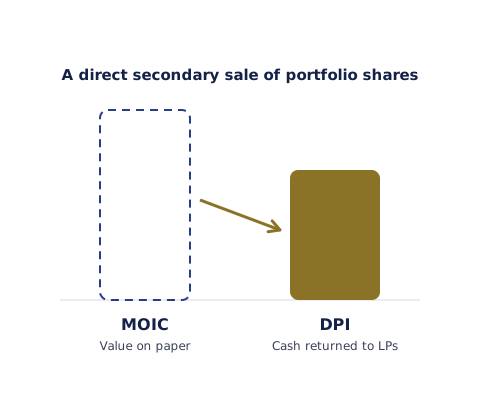
A direct secondary is the sale of shares a fund holds in a portfolio company to another investor. The fund sells part or all of a position; the company continues as before. Proceeds can then be distributed to limited partners, turning part of the fund’s MOIC into DPI.
We help funds identify buyers confidentially, negotiate terms, and coordinate company approvals through closing. For limited partners selling fund interests instead, see LP stake sales.
At a Glance
- Best for Venture and growth funds seeking distributions
- Company value $500M+ enterprise value; most of our work is above $1B
- Position size $500K minimum
- Fees Competitive with industry standards
- Confidentiality Information shared only as needed
What Changes When a Sale Has a Process
Answering LP questions about distributions
Show LPs a plan for returning capital
Taking the first inbound bid
Weigh interest from more than one qualified buyer
Holding a position past your plan
Rebalance on a timeline you choose
Managing approvals ad hoc
Know the company’s transfer steps before outreach
How a Direct Secondary Works
01
Understand Your Goals
Which position, how much to sell, and the timing that fits the fund.
02
Tell the Story
Present the position with the context institutional buyers need.
03
Find the Buyer
Confidential outreach to qualified buyers in our network.
04
Agree the Terms
Negotiate price and terms, and work through company approvals.
05
Close the Transaction
Documentation, settlement and the transfer of the shares.
Why Sell Side Securities™
Relationship-Led
The Modern Handshake Deal™ pairs technology that finds counterparties with relationships that close transactions. You work with people who know your position, not a listing form.
Confidential by Design
Outreach is discreet, and information about your position is shared only as needed with qualified counterparties. Company approval steps are explained before they happen.
Both Sides of the Trade
We work with sellers and with buyers, so we know what each side needs to reach a closing, and we keep the process moving when approvals take time.
Frequently Asked Questions
Will selling a position signal weakness to the market?
Outreach is confidential and limited to qualified buyers, and information is shared only as needed. Many funds sell part of a position to manage concentration and distributions.
Do we need the company’s approval?
Usually. Most companies have transfer provisions and rights of first refusal. We review them first and explain each step before outreach.
Can we sell part of a position?
Yes. Many direct secondaries sell a portion of a holding and keep the rest.
How do your fees work?
Our fees are competitive with industry standards and explained in full before you engage us.
Start a Confidential Conversation
Tell us about the position you hold or the one you’re looking for. We’ll reply by email to discuss whether a transaction is possible. Fit runs both ways, and there’s no obligation.