
Home Secondaries
Secondaries, Explained.
How founders, employees and funds sell private company stock and fund interests before an IPO, and how accredited investors acquire positions, in the secondary market.
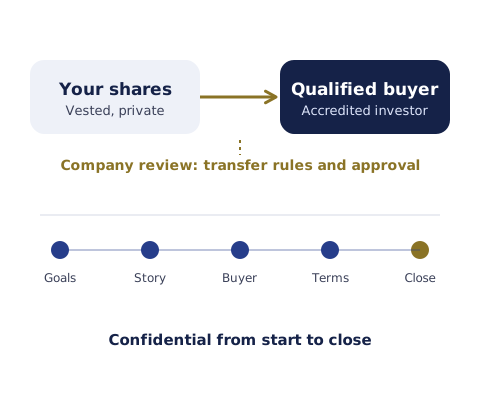
Most Holders Don’t Know Their Shares Can Move.
Ask a founder or an early employee how they’ll get liquidity, and most will say the same thing: when the company goes public, or when it’s acquired. Few realize there’s an established market for shares in private companies long before either happens.
That gap is expensive. Wealth stays concentrated in one company, plans stay on hold, and the value on paper moves with markets nobody on your side controls.
Those who do look often find marketplaces and forums with more questions than answers: who the buyers are, what the company must approve, and what the process actually involves.
What It Costs You
Concentration
Most of your net worth tied to one private company.
Timing
An exit date set by the company and the markets.
Uncertainty
Unclear rules, unclear buyers, unclear process.
Missed Options
A sale you could have planned, left unexplored.
What Is a Secondary Sale of Private Company Stock?
A secondary sale is the sale of existing shares in a private company, or an interest in a private fund, by a current holder to another investor. The company doesn’t issue new shares and doesn’t receive the money; the seller does.
Secondaries are how founders, employees and early investors turn pre-IPO stock into liquidity, and how funds turn MOIC into DPI, without waiting for an IPO or acquisition. Sell-side advisory is representation for the seller: preparing the position, finding qualified buyers confidentially, negotiating terms and working through the company’s transfer process, including any right of first refusal, to closing.
On the other side, accredited investors use the same market to acquire positions in established private companies they couldn’t otherwise access. See Acquiring a position.
Secondaries at a Glance
- Sellers Founders, employees, executives, funds and LPs
- Buyers Accredited investors; qualified purchasers preferred
- Company value $500M+ enterprise value; most work above $1B
- Position size $500K minimum
- Approvals Company transfer rules and any ROFR
The Main Types of Secondaries
Direct Secondaries
A founder, employee, angel or fund sells shares it holds in a private company. See selling private shares and Direct secondaries for funds.
LP Stake Sales
A limited partner sells an interest in a private fund, usually with the general partner’s consent. See LP stake sales.
GP-Led Transactions
A fund manager moves assets into a new vehicle and offers existing investors liquidity. These are institutional transactions with their own processes.
Waiting for an Exit, or Selling Secondary Shares Now?
Neither choice is right for everyone. The difference is who controls the timing.
| Waiting for an IPO or acquisition | A secondary sale | |
|---|---|---|
| Timing | Set by the company and the markets | Set by you and buyer interest |
| Amount | All or nothing at the exit | Part or all of a position |
| Price | Set by the exit | Negotiated with qualified buyers |
| Concentration | Unchanged until the exit | Can be reduced now |
| Approvals | Handled by the company at exit | Company transfer process and any ROFR |
A secondary sale isn’t a prediction about the company. It’s a decision about your own timing, concentration and plans, and one to make with qualified tax and financial professionals. Our partner firm Different Investments explains why concentration matters in How Does Your Risk Tolerance Affect Your Portfolio Risk?.
Secondaries Questions, Answered
Straight answers to the questions sellers and buyers ask most, with a full article behind each one.
What Are Secondaries?
Transactions in which existing holders sell private-company shares or fund interests to other investors. In private equity and venture capital they include direct secondaries, LP stake sales and GP-led deals.
How Do You Sell Stock in a Private Company?
Review your company’s transfer rules, confirm what you can share, find a qualified buyer, agree terms, and complete the company’s approval and right of first refusal process before closing.
Can You Buy Pre-IPO Stock?
Accredited investors can often buy existing shares from holders in a secondary transaction, subject to company approval. It’s speculative and illiquid, and you could lose your investment.
What Does Sell‑Side Due Diligence Involve?
Gathering proof of ownership, your share class and rights, the transfer provisions in your company’s documents, and what information you’re permitted to share, before you go to market.
Secondaries Marketplace or Advisor?
Marketplaces suit simple transfers and experienced holders. Relationship-led advisory suits larger positions, complex transfer rules and confidentiality needs.
How Do Funds Turn MOIC Into DPI?
By selling part or all of a portfolio-company position to another investor in a direct secondary, then distributing the proceeds to limited partners.
How a Secondary Transaction Works
Every secondary at Sell Side Securities™ follows The Modern Handshake Deal™.
01
Understand Your Goals
Size, timing and the transfer rules that apply.
02
Tell the Story
The context a serious counterparty needs.
03
Find the Counterparty
Confidential outreach within our network.
04
Agree the Terms
Price, terms and company approvals.
05
Close the Transaction
Documentation, settlement and the transfer of the shares.
Secondaries FAQ
Are secondaries legal for private company stock?
Yes, when they follow securities laws and the company’s transfer rules. Buyers generally must be accredited investors, and many companies must approve transfers.
Do I need my company’s permission to sell?
Often. Many companies require approval and hold a right of first refusal. Reviewing your documents is the first step.
How is the price set in a secondary sale?
By negotiation, informed by recent funding rounds, company performance, your share class and market conditions.
What size positions do you work with?
Positions of $500,000 or more in companies valued at $500 million or more, with most of our work above $1 billion.
Start a Confidential Conversation
Tell us about the position you hold or the one you’re looking for. We’ll reply by email to discuss whether a transaction is possible. Fit runs both ways, and there’s no obligation.